




Why Is Professional Piping Design So Important For A New EPS Factory?
Nov 24, 2026
Leave a message
EPS Factory Piping System Design: Why Is It Critical to Production Efficiency?
Buying high-quality EPS machines is only the first step. But what happens if your factory's piping system cannot support their performance?
When setting up a new EPS factory, many investors focus on selecting pre-expanders, block molding machines, shape molding machines, and cutting equipment. However, one critical factor is often overlooked: the design of the factory's piping system.
A poorly designed piping network can lead to unstable steam pressure, longer production cycles, excessive energy consumption, and inconsistent product quality.
So, how does professional piping system design affect the performance of an entire EPS production line?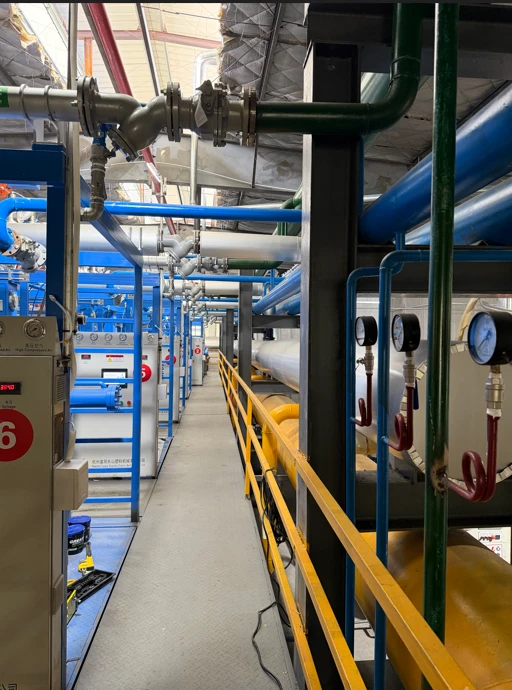
Q1: What piping systems are required for an EPS factory?
A complete EPS production line typically requires six essential systems:
1. Steam Supply System: Delivers stable steam pressure and sufficient flow to pre-expanders and molding machines.
2. Central Vacuum System: Supports efficient vacuum cooling and shorter molding cycles.
3. Compressed Air System: Supplies pneumatic valves, filling guns, and automatic control components.
4. Cooling Water System: Maintains the required cooling capacity for vacuum pumps and other equipment.
5. Condensate Recovery & Drainage System: Removes condensate and enables heat recovery where practical.
6. Material Conveying System: Transfers expanded EPS beads between pre-expanders, aging silos, and molding machines.
Each system must be properly sized and integrated to ensure reliable production.
Q2: Why is professional piping design so important?
Because even advanced EPS machines cannot perform efficiently without properly designed utility systems.
For example, undersized steam pipelines may cause pressure drops when multiple molding machines operate simultaneously. This can result in longer heating cycles and inconsistent bead fusion.
Similarly, excessive pressure losses in vacuum pipelines can slow down cooling, while insufficient compressed air pressure may affect pneumatic valve operation.
Professional piping design helps manufacturers achieve:
* Stable production and consistent product quality.
* Lower steam consumption and reduced energy losses.
* Shorter molding cycles and improved productivity.
* Fewer equipment interruptions and easier maintenance.
* Greater flexibility for future factory expansion.
The objective is not simply to connect machines, but to optimize the performance of the entire production line.
 Q3: How should an EPS factory piping system be designed?
An efficient piping system should be engineered according to the factory's actual production requirements, rather than simply matching machine connection sizes.
Important considerations include:
Production Capacity: Calculate the steam, vacuum, compressed air, and cooling water requirements of all equipment, including simultaneous peak demand.
Pipeline Sizing: Select appropriate pipe diameters based on flow rates, pressure losses, operating conditions, and pipeline distances.
Factory Layout: Optimize pipeline routing to minimize unnecessary bends, excessive distances, and maintenance difficulties.
Energy Efficiency: Incorporate appropriate insulation, steam traps, condensate management, and heat recovery solutions.
Future Expansion: Reserve suitable space and connection points for additional machines, with utility capacity planned according to the factory's development strategy.
A well-designed system should balance initial investment, operating efficiency, reliability, and future production requirements.
Q4: Can DONGSHAN provide a complete piping system solution for a new EPS factory?
Yes. With nearly 30 years of experience in EPS and EPP machinery manufacturing, DONGSHAN has the technical expertise to develop integrated utility and piping system solutions for complete EPS production lines.
Unlike suppliers that focus primarily on individual machines, DONGSHAN approaches each project from the perspective of the entire production process.
Our engineering team considers machine specifications, production capacity, product density, factory layout, and actual operating requirements when developing the overall solution.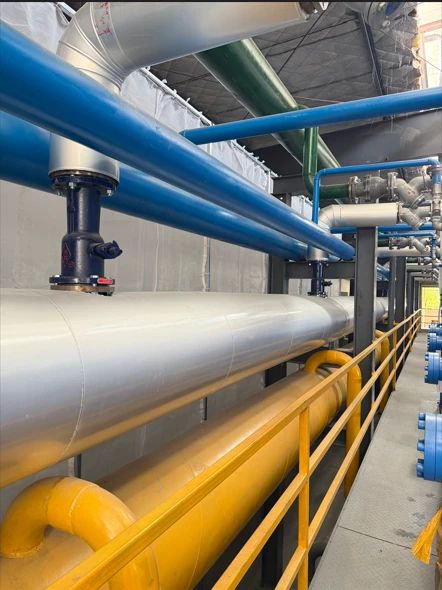
Our technical support covers:
* Complete EPS production line planning and equipment layout.
* Steam consumption analysis and distribution system planning.
* Central vacuum system configuration and pipeline sizing.
* Compressed air and cooling water system planning.
* Condensate management and energy-saving recommendations.
* Material conveying pipeline arrangement.
* Equipment connection drawings and installation guidance.
We also work with customers and their local engineering contractors to coordinate installation and commissioning, helping ensure that the utility systems meet the operational requirements of the equipment. Local code compliance, construction, and statutory inspections are handled by appropriately qualified contractors.
Q5: What makes DONGSHAN different from a traditional EPS machine supplier?
We understand that building an EPS factory is not simply about purchasing machines. It is about creating a complete, efficient, and reliable production system.
Since 1997, DONGSHAN has accumulated extensive experience in EPS machinery manufacturing and production line engineering.
This practical knowledge allows us to consider how individual machines interact with shared utility systems, helping customers avoid mismatched capacities, unnecessary energy losses, and costly modifications after installation.
Our goal is to provide customers with technically sound solutions that improve production efficiency, control operating costs, and support long-term factory development.
Send Inquiry